The Yangwara-Pojulu Tijor Community has declared the ongoing demarcation and allocation of plots in the disputed Nyamini area “null and void”, warning buyers and investors against developing land acquired through what it describes as unauthorised transactions.
The community says Nyamini is ancestral land belonging to the Yangwara people, particularly the Napija Clan of Ku’da Boma and the Wanyang Clan of Sirimon Boma in Dolo Payam.
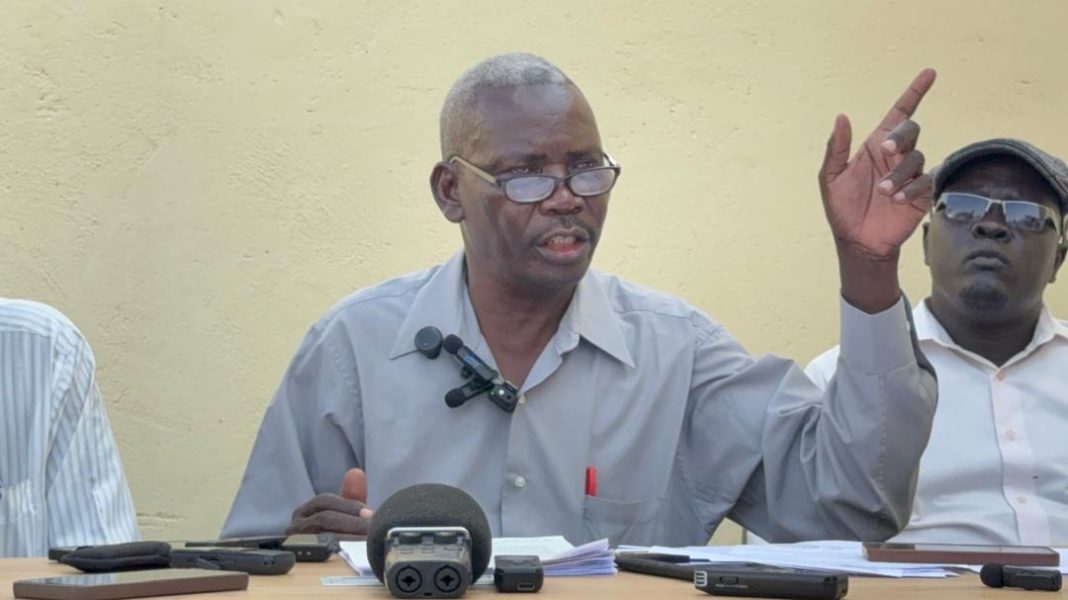
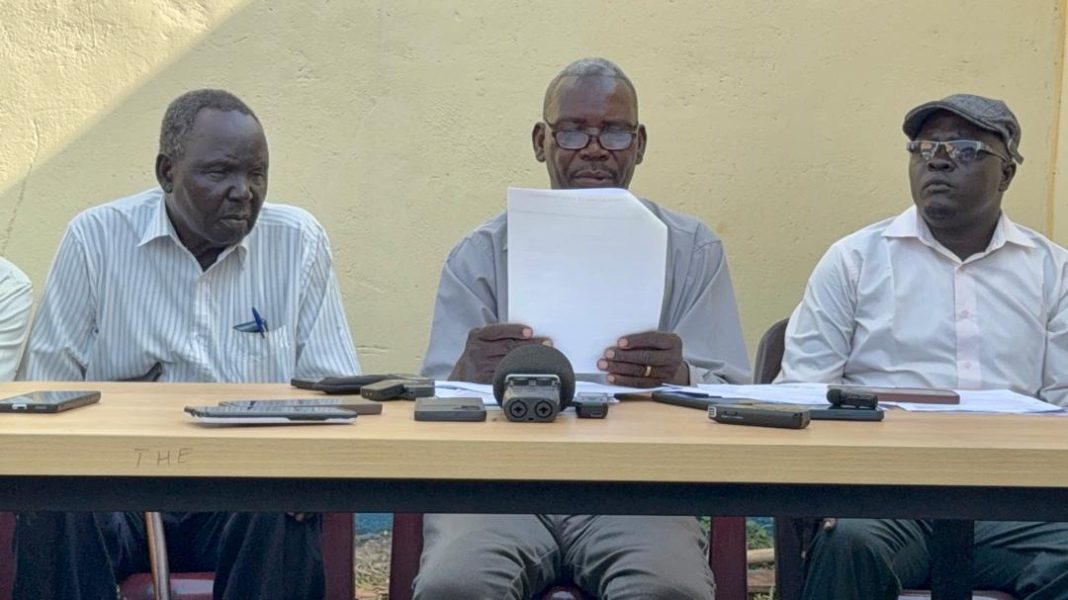
Speaking at a press conference in Juba, Yepete Mogga Abudalla, Secretary General of the Yangwara Community, said the community would not recognise land transactions carried out without the consent of the recognised traditional leadership or in violation of government directives.
“We are warning all buyers and investors not to develop plots that have been acquired through these unauthorised demarcations,” Mr Abudalla said, according to the community’s statement.
He said the Yangwara community had pursued legal and peaceful avenues to resolve the dispute for more than a decade, but alleged that demarcation and plot allocation had continued despite government orders intended to stop such activities.
Governor’s order
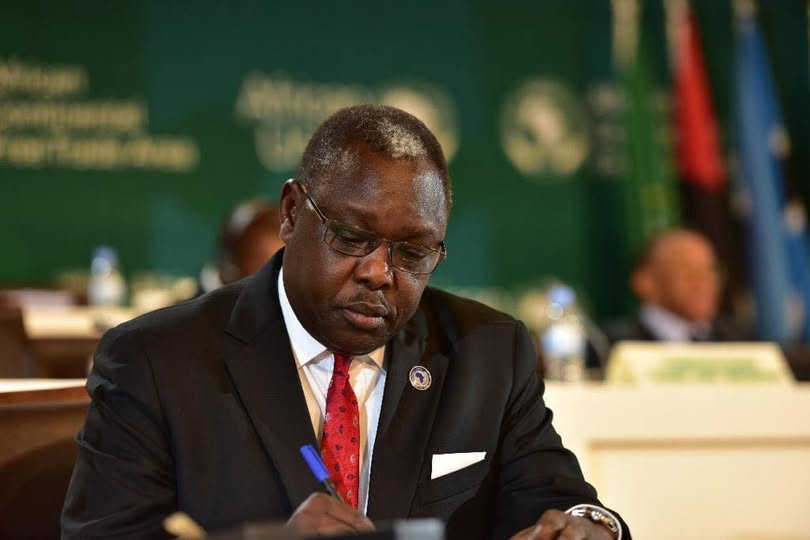
The community’s warning comes against the backdrop of Gubernatorial Order No. 19/2026, issued by Central Equatoria State Governor Emmanuel Adil Anthony Wani on 2 March 2026.
The order specifically cancelled the issuance of any plot document in Nyamini, with immediate effect from the date of its signature.
Governor Adil issued the order under powers conferred by Republican Decree No. 408/2025 and Article 99(2)(b) of the Transitional Constitution of Central Equatoria State.
The governor’s directive also tasked the state Security Committee, headed by the Deputy Governor, with stopping the demarcation process and engaging the two communities to resolve the dispute.
It further warned that any individual found issuing land documents would be apprehended and face legal action.
The Commissioner of Juba County was directed to implement the order with immediate effect.
Despite the directive, the Yangwara-Pojulu Tijor Community says reports of plot demarcation, allocation and issuance of tokens have continued in parts of Nyamini.
The community is therefore calling for the enforcement of the governor’s order and an end to any further land transactions until the dispute is resolved.

Joseph Modi Justin, Youth Representative for Pojulu Tigon, urged young people and other members of the public not to participate in activities that could escalate the land dispute.
He also warned prospective buyers to establish the legal and customary status of land before making payments or beginning construction.
The community says buyers who proceed with transactions in the disputed area risk losing both their money and any claimed rights over the plots.
“Need cannot erase ownership, and development cannot be built on injustice,” the community said in its statement.
It maintains that any sale, allocation, contract or investment involving Nyamini without authorisation from the legitimate Yangwara-Pojulu Tijor leadership should not be recognised.
Peter Keliona Wani, Secretary for Land and Community Development of the Yangwara-Pojulu Tijor Community, said the community’s position was based on historical, customary and administrative records rather than a recent claim.
He cited historical accounts dating back to the 19th century, including records attributed to European travellers who passed through the area in the 1850s and 1860s.
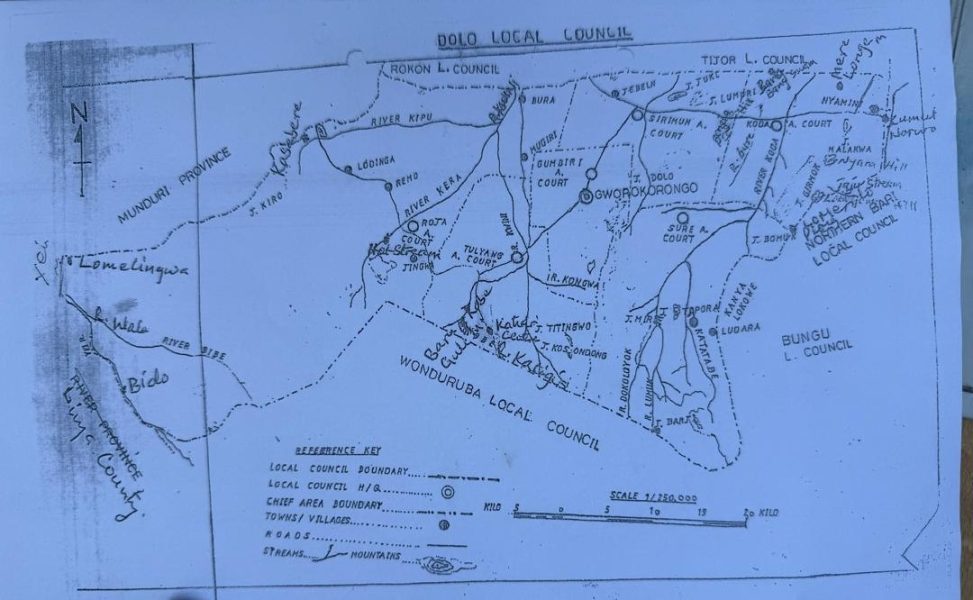
The community also points to the Warrant of Establishment for Dolo Payam, issued in 1999, which it says includes Nyamini village within Dolo Payam.
Another key document cited by the community is the report of the Juba County Peace and Reconciliation Committee, established in January 2013 to address the land dispute.
According to the Yangwara leadership, the committee recognised the disputed land as traditionally and historically associated with the Yangwara people and recommended that unilateral demarcation and investment activities should not take place until the dispute was resolved.
The community says these records form part of a wider body of evidence supporting its claim to Nyamini.
The dispute over Nyamini has continued since 2013, with competing claims involving neighbouring communities.
The Yangwara community says it has repeatedly sought government intervention and participated in dialogue rather than resorting to violence.
In 2022, the Yangwara-Pojulu Tijor leadership says it reached a boundary agreement with the Juba Na Bari Community, identifying Kumut Naruwo as a recognised boundary.
The dispute resurfaced in 2025 following renewed demarcation activities, prompting the matter to reach the Central Equatoria State Security Council.
The Yangwara leadership says it submitted documentary evidence, including warrants of establishment and previous reconciliation recommendations, during engagements with state authorities.
The community subsequently petitioned the state government, leading to the governor’s March 2026 order cancelling the issuance of plot documents in Nyamini.
Calls for enforcement
The Yangwara-Pojulu Tijor Community is now calling on the Central Equatoria State Government to enforce Gubernatorial Order No. 19/2026 and stop further demarcation, allocation and development of plots in the disputed area.
It has also called on the Juba County Commissioner and security agencies to enforce the order impartially.
Mr Abudalla, Mr Modi and Mr Wani said the community remained committed to resolving the dispute through lawful and peaceful means but would continue to defend what it considers its ancestral land.
The community has also appealed to companies, investors, brokers and individuals to refrain from purchasing or developing plots in Nyamini while the ownership dispute remains unresolved.
The land remains contested, and the Yangwara-Pojulu Tijor Community’s position represents its claim to ownership.
Any final determination of the competing claims would depend on the relevant government authorities or a competent court.