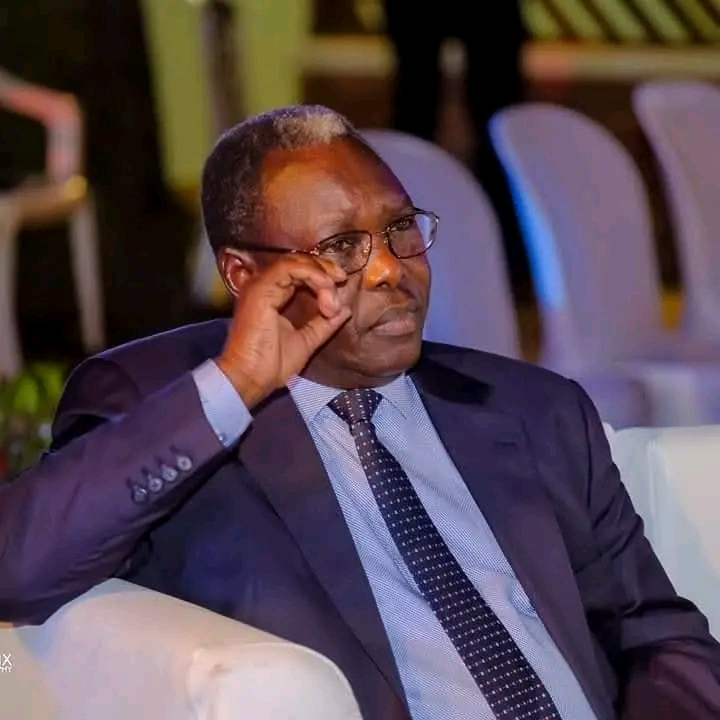
South Sudan’s National Alliance of Political Parties has split over the leadership of its chairperson, Kornelio Kon Ngu, with eight political parties declaring that they have withdrawn their confidence in him and rejecting his claim to represent the alliance.
The move comes days after Kon, who is also the Third Deputy Speaker of the Transitional National Legislative Assembly (TNLA) under the power-sharing arrangements of the 2018 peace agreement, announced his intention to contest South Sudan’s December 2026 presidential election against President Salva Kiir Mayardit.
The National Alliance is part of the Other Political Parties (OPP) grouping under the Revitalized Agreement on the Resolution of the Conflict in South Sudan (R-ARCSS), with Kon occupying the parliamentary position allocated to the opposition political bloc.
But the alliance now faces an internal leadership crisis after eight party leaders signed a statement reaffirming a previous vote of no confidence in Kon.
The leaders accuse him of violating the alliance’s internal regulations, making unilateral decisions, exceeding his mandate and using the chairmanship without adequate consultation with member parties.
They also rejected Kon’s recent emergence as a presidential candidate, saying his nomination was not endorsed by the alliance’s Leadership Council.
The dispute threatens to complicate efforts by opposition parties to present a united political front ahead of the planned 22 December 2026 elections.
In the statement, the Leadership Council said it had “unanimously” withdrawn its confidence in Kon as chairperson of the National Alliance and as the principal representative of the Other Political Parties.
The group also rejected what it described as the “unilateral” nomination of Kon as a presidential candidate.
The declaration follows a weekend political summit at which Kon announced his intention to challenge President Kiir in the forthcoming election.
Kon’s presidential bid had been publicly backed by some parties attending the summit. However, reports indicate that the alliance as a whole has now fractured over whether he was legitimately endorsed as its candidate.
The rival faction said Kon could no longer issue correspondence or make political statements on behalf of the National Alliance.
It also called on President Kiir to revoke Kon’s appointment as Third Deputy Speaker of the TNLA, arguing that his continued role could contribute to further political tensions.
Kon was appointed to the parliamentary leadership position as part of the power-sharing arrangements under the 2018 peace agreement. The official TNLA leadership listing identifies him as Deputy Speaker for Members’ Welfare, representing the OPP.
The eight parties listed a series of allegations against Kon, including what they described as the commercialisation of political nominations and appointments within the alliance.
They accused him of concentrating positions within his own party, the National United Democratic Front (NUDF), while sidelining other member parties.
The statement also accused him of appointing relatives, friends and individuals allegedly without established party affiliations, and of threatening to replace political appointees who did not meet his personal or family demands.
The group further alleged that Kon had imposed himself as a presidential candidate and threatened those who opposed his ambitions.
The accusations have not been independently verified, and Kon’s supporters have rejected the attempt to remove him, maintaining that he remains the legitimate chairperson of the alliance.
The statement also criticised Kon for remarks concerning the National Elections Commission chairperson, Abednego Akol, and for describing the ruling Sudan People’s Liberation Movement (SPLM) as a military movement rather than a political party.
The alliance faction opposing Kon said determining the status of registered political parties falls under the mandate of the Political Parties Council.
The SPLM has separately rejected Kon’s criticism, saying the party does not have a military wing.
The leadership dispute is particularly significant because the National Alliance operates within the Other Political Parties component of the 2018 peace agreement.
The group opposing Kon said newly admitted political parties that joined the alliance after the signing of the R-ARCSS should be removed, arguing that they were not signatories to the agreement.
It named several parties that it said should no longer be part of the alliance.
The faction also reaffirmed its commitment to implementing the peace agreement and holding elections as scheduled.
The development comes at a sensitive moment as South Sudan’s political parties prepare for the December polls, which are intended to mark the end of the country’s prolonged transitional period.
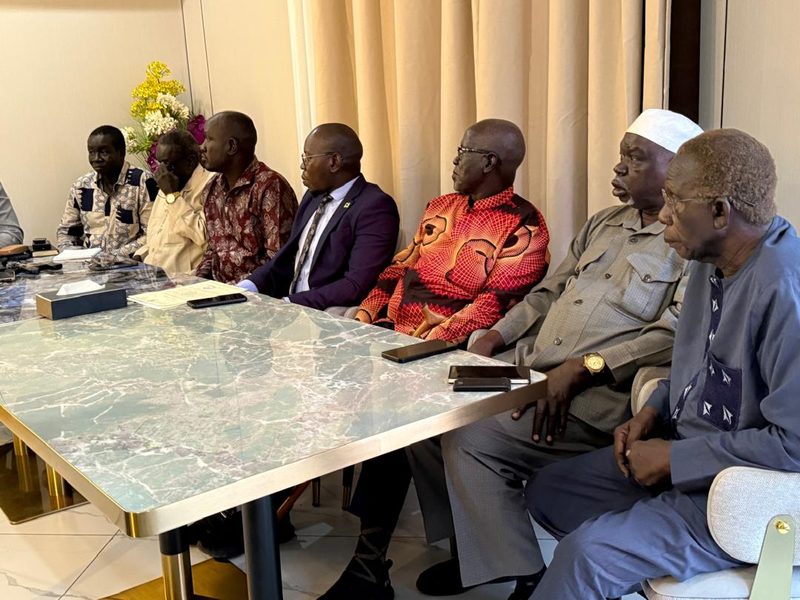
The statement was signed by leaders representing eight political parties within the National Alliance.
They are:
Juma Saced Warjo — Chairperson, South Sudan Democratic Party (SSDP)
Jeach Chuol Gai — Acting Chairperson, South Sudan Democratic Front (SSDF)
Paulino Lukudu Obede — Leader, United South Sudan Party (USSP)
Joseph Wol Modesto — Secretary-General, Communist Party of South Sudan (CPSS)
Abdallah Deng Nhial — Chairperson, Popular Congress Party (PCP)
Willian Jabi Ngalamu — Acting Chairperson, National Democratic Alliance (NDA)
Albino John Laku — Chairperson, Democratic Unionist Party (DUP)
George James Gatluak — Acting Chairperson, Peace, Unity and Reconciliation (PURE)
The announcement was made on behalf of the faction describing itself as the Leadership Council of the National Alliance.
The dispute places Kon in an increasingly difficult position as he attempts to build a presidential campaign ahead of the December election.
His announcement made him one of the first prominent opposition politicians to publicly declare a challenge to President Kiir.
He has argued that South Sudan needs political change and criticised what he described as the concentration of public services, infrastructure and economic opportunities in Juba.
But the leadership split now raises questions over whether he can continue to present himself as the candidate of the wider National Alliance.
Kon’s supporters dispute the no-confidence declaration, saying those behind it do not constitute the recognised leadership of the alliance.
The rival positions mean that South Sudan’s opposition political landscape could enter the election season divided, with competing claims over who controls the alliance and who has the authority to speak on its behalf.
For now, the central question is whether the dispute will be resolved internally or develop into a broader political confrontation within the OPP bloc — one of the opposition components created under the 2018 peace agreement.
With elections scheduled for 22 December, the leadership battle could have consequences beyond the alliance itself, particularly if competing factions seek to field different candidates or claim control of the opposition bloc.