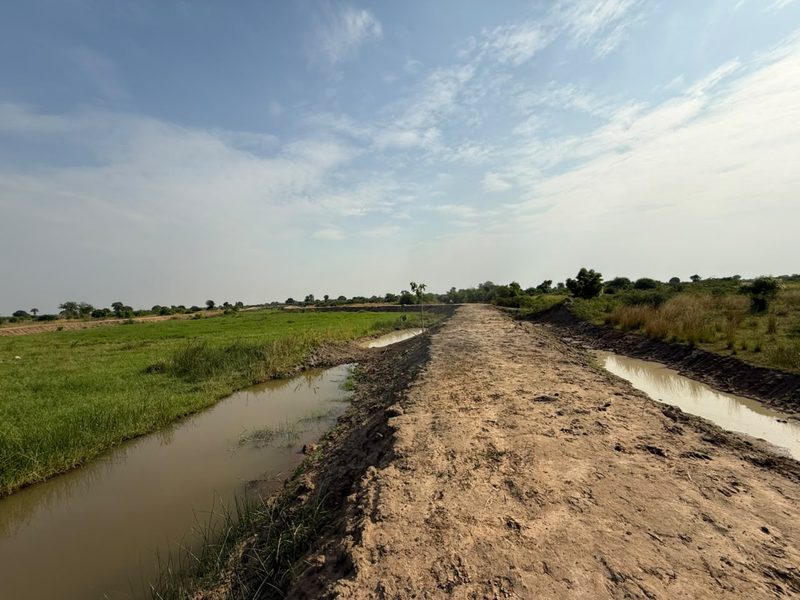
More than 15 kilometres of flood-protection dykes and seven kilometres of drainage channels have been rehabilitated in Bor Town, Jonglei State, in an effort to protect vulnerable communities, agricultural land and essential infrastructure from seasonal flooding.
The rehabilitation works are being implemented under the Regional Climate Resilience Programme (RCRP), a World Bank-funded initiative aimed at strengthening flood management and helping communities withstand climate-related risks.
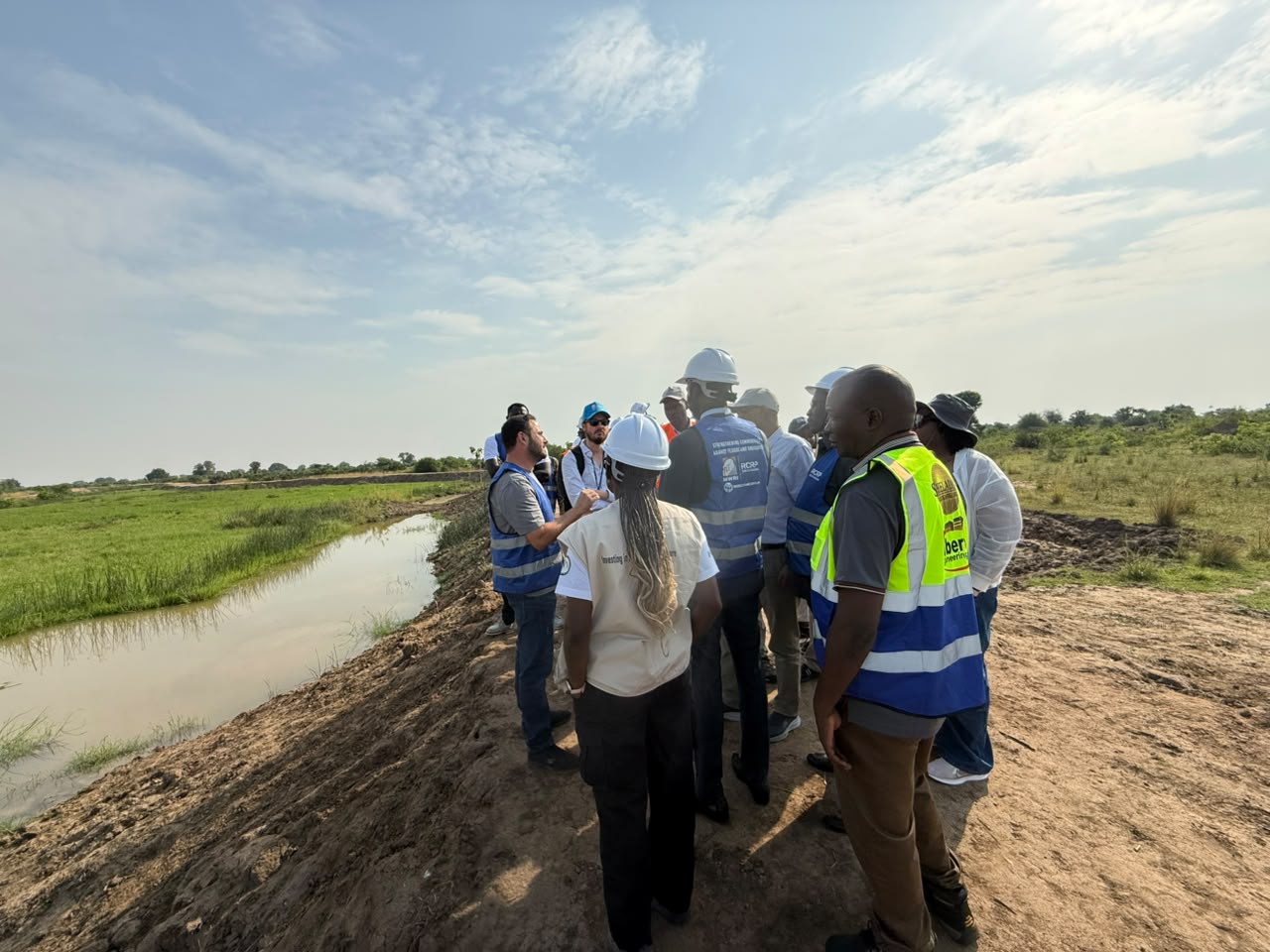
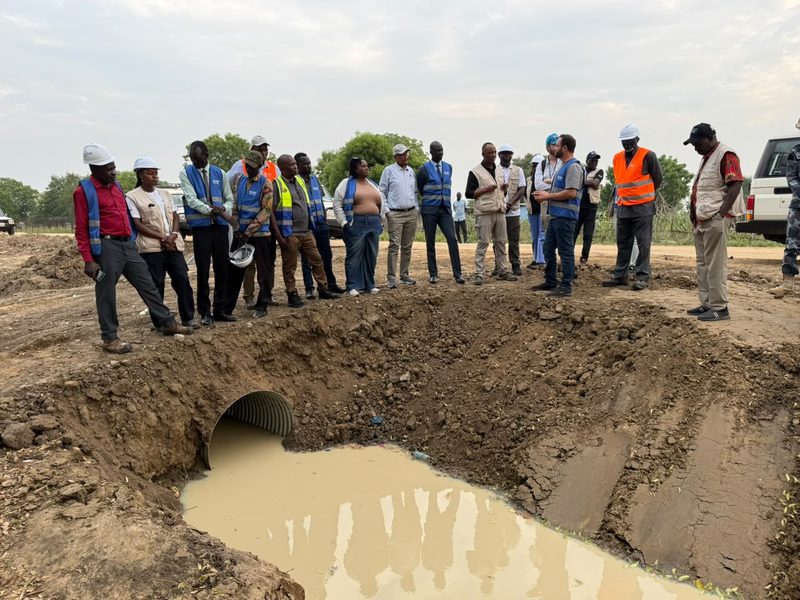
A joint field mission involving government officials, development partners and project representatives inspected the rehabilitated infrastructure to assess progress and examine its expected contribution to flood protection.
The delegation included representatives from the Ministry of Water Resources and Irrigation (MWRI), Jonglei State authorities, the Flood Management Committee, the World Bank, the United Nations Office for Project Services (UNOPS) and the International Organization for Migration (IOM).
Among those present were Mr Andrew Yunda Stephen, RCRP Programme Coordinator at the ministry; Wilson Awuol Gajang Awuol Dudi, Jonglei State’s Caretaker Minister of Local Government and Law Enforcement; and John Dut Kuch, Caretaker Mayor of Bor Municipality.
The team inspected rehabilitated embankments, drainage channels and pumping equipment designed to reduce the risk of floodwater entering residential and agricultural areas.
The improvements are expected to help protect farming communities whose livelihoods depend on productive land and seasonal agricultural activities.
Vegetable gardens and cultivated farmland along sections of the rehabilitated dykes highlight the economic importance of protecting agricultural areas from flooding, which has repeatedly disrupted cultivation, damaged crops and threatened household incomes.
For vulnerable families, seasonal floods can also result in damaged homes, displacement and interruptions to daily economic activities.
However, the actual impact of the rehabilitation on crop production, household income and flood-related losses will become clearer after subsequent rainy seasons.
Despite the infrastructure improvements, questions remain about the long-term sustainability of Bor’s flood-protection systems.
Regular maintenance of embankments, drainage channels and pumping equipment will be essential to ensure the structures remain functional during periods of heavy rainfall.
Blocked drainage channels, inadequate pumping capacity and poorly maintained dykes could undermine the benefits of the rehabilitation if not addressed.
Beyond the completed works, the programme is supporting updated flood modelling and engineering assessments to guide future investments in drainage systems, culverts, flood-protection structures and erosion-control measures.
These assessments are expected to help identify vulnerable locations and inform additional interventions needed to strengthen the town’s resilience.
Bor Town and surrounding communities in Jonglei State have faced recurring seasonal flooding, which has threatened homes, farmland, infrastructure and livelihoods. The rehabilitation forms part of broader efforts to improve flood management and reduce communities’ exposure to climate-related disasters.
The Regional Climate Resilience Programme is financed by the World Bank and implemented by the Ministry of Water Resources and Irrigation through its Project Implementation Unit, in partnership with IOM.
While the rehabilitation of more than 15 kilometres of dykes marks an important infrastructure improvement, its success will ultimately depend on whether the structures can protect homes, farms and livelihoods when future rainy seasons arrive.