A prolonged dry spell has disrupted agricultural production in Eastern Equatoria State, worsening food insecurity and contributing to reported hunger-related deaths in some of the worst-affected communities.
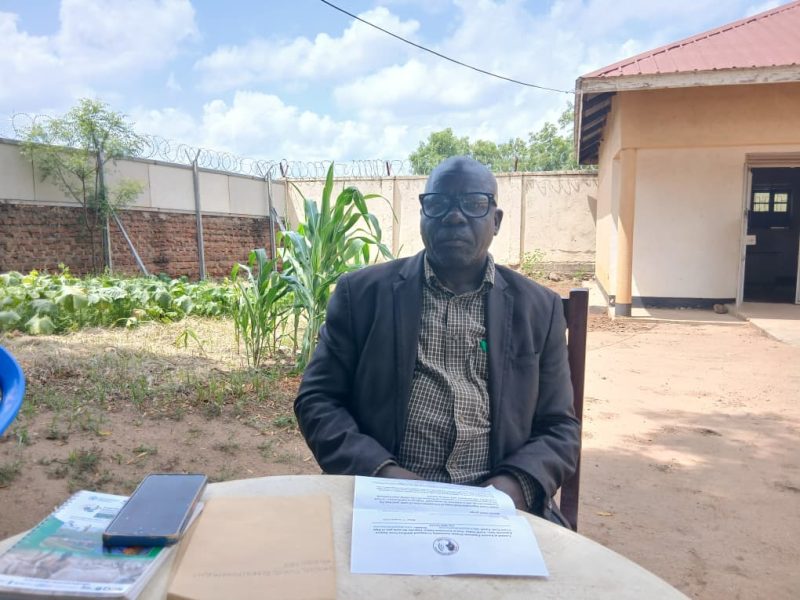
State Minister of Agriculture Ochola Bosco Oringa said dry conditions between June and July severely affected the first agricultural season, resulting in poor crop yields across several parts of the state.
“The production for the first season is very poor this year,” Oringa said.
Eastern Equatoria is one of South Sudan’s major agricultural regions, with farming providing food and livelihoods for communities across the state.
The minister identified Torit, Magwi, Ikotos and Budi among the counties heavily engaged in agricultural production.
However, prolonged dry conditions disrupted planting and crop development, putting additional pressure on households that depend largely on agriculture for food and income.
Oringa said Lafon County was among the areas most severely affected by the dry spell.
He also identified Torit East and Kele Payam in Torit County, as well as Kapoeta North, Kapoeta South, Kapoeta East and parts of the Kidepo Valley, as areas that experienced significant impacts.
The minister said the government had received reports of hunger-related deaths in Lafon and Kele.
“The dry spell cost the lives of people. People in Lafon died of hunger due to the dry spell, even in Kele also,” he said.
According to Oringa, information from the Relief and Rehabilitation Commission indicated that about eight people had died.
However, he acknowledged that separate reports from humanitarian and community sources have cited higher figures.
The different estimates underline the need for authorities and humanitarian organisations to independently verify the scale of the reported deaths and the wider food crisis.
Rainfall returned to parts of Eastern Equatoria in late July and August, offering some relief to farmers and allowing agricultural activities to resume.
Oringa said some farmers had already started cultivating second-season crops, while others were engaged in weeding.
Some produce, including maize, has also started reaching local markets.
But the return of rainfall has not immediately resolved the food and livelihood pressures facing households that lost crops during the first season.
Farmers affected by the dry spell may require seeds, farming tools and other agricultural inputs to restore production and strengthen their resilience to future climate shocks.
The state government is calling for greater coordination among government institutions, humanitarian organisations, development partners, the private sector and the international community to respond to the crisis.
Oringa commended organisations that have already provided assistance, including Global Voices Organisation, which he said had supported affected communities in Lafon.
He urged more partners to support both immediate humanitarian needs and agricultural recovery.
“We need to effectively come together to draw our engagement roadmap, especially in supporting these agricultural activities,” Oringa said.
The minister also welcomed assistance from partners providing farming tools and other agricultural inputs to communities in areas including Torit and Magwi.
For the Ministry of Agriculture, the crisis highlights the need for longer-term investment in food production alongside emergency humanitarian assistance.
“Food is first in life. If you don’t eat, then you don’t live,” Oringa said.
He encouraged communities to continue engaging in agriculture and other livelihood activities despite the challenges posed by changing weather conditions.
Oringa also linked Eastern Equatoria’s agricultural priorities to the national push to strengthen South Sudan’s agri-food system in 2026, saying the sector should encompass crop farming, livestock production and agroforestry, including tree planting.
Although renewed rainfall has enabled farmers to return to their fields, communities that lost crops during the first season continue to face food and livelihood pressures.
The immediate challenge is to ensure vulnerable households receive assistance while farmers are provided with the seeds, tools and other inputs needed to resume production.
For communities in Lafon, Kele and other affected areas, recovery will depend not only on rainfall but also on timely humanitarian assistance, agricultural support and stronger coordination between the government and its partners.
As Eastern Equatoria seeks to recover from the dry spell, authorities are urging stakeholders to look beyond short-term relief and invest in a more resilient agricultural system capable of protecting communities from future climate-related shocks.