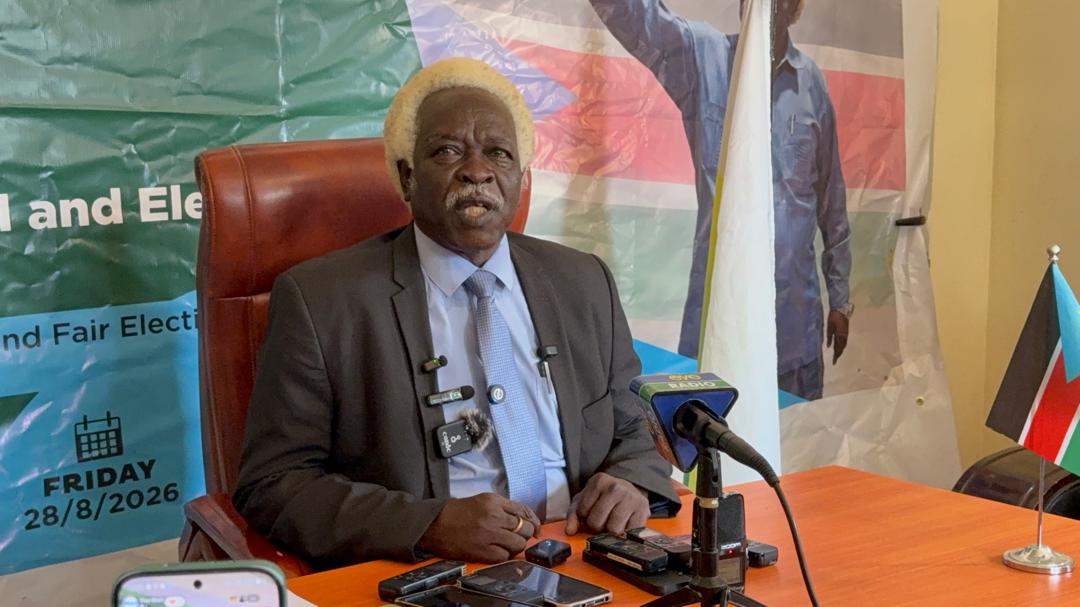
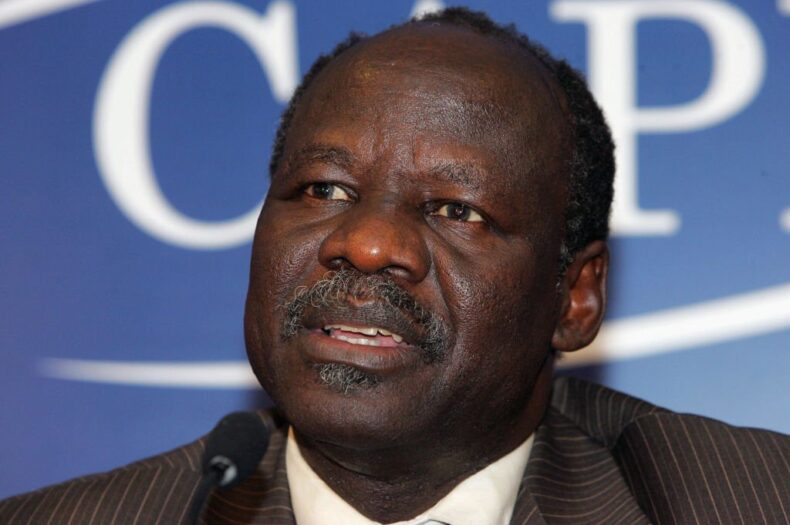
National Democratic Movement (NDM) leader Dr. Lam Akol has questioned whether South Sudan is creating the political conditions needed for free and equitable elections, with less than three months remaining before the scheduled December 22 polls.
Speaking ahead of the elections, Akol pointed to the limited visibility of political campaigns and questioned why candidates from opposition parties have yet to become publicly prominent.
“We are left with 88 days for the elections, and you have not heard who are the candidates from other parties. By this time, the whole country should have been full of billboards of people who are campaigning,” Akol said.
The veteran opposition politician also raised concerns over restrictions on political gatherings, saying organizers currently need permission from security authorities to hold meetings.
“Is this an atmosphere for having a free and equitable election?” he asked.
Akol’s remarks come as political parties prepare for elections that the National Elections Commission has scheduled for December 22, 2026.
The commission says preparations are underway, including work toward voter registration and the assessment of voting centres.
The election preparations have also unfolded amid disagreements among political parties over changes to the legal and political framework governing the polls.
The South Sudan Opposition Alliance, in which Akol’s NDM is represented, has criticised amendments to the peace agreement and election laws, arguing that such changes should involve consultation among the signatories to the agreement.
The elections are part of the transition established under the Revitalised Agreement on the Resolution of the Conflict in South Sudan (R-ARCSS), signed in September 2018 after years of conflict between forces aligned with President Salva Kiir and opposition forces led by Riek Machar.
The agreement created a power-sharing transitional government and provided for elections to mark the end of the transitional period.
It also established a National Elections Commission to organise elections before the transition ends.
The transitional period was initially expected to end earlier, but the parties agreed in September 2024 to extend it by 24 months to February 2027 and reschedule the elections for December 2026.
With the December vote now approaching, the peace-monitoring body RJMEC has urged the parties to use political dialogue to address outstanding issues, including security arrangements, constitutional reforms, judicial reforms, economic reforms and transitional justice.
South Sudan has not held a nationwide election since gaining independence in 2011, making the planned December vote a significant test of the country’s transition from the peace agreement to an elected government.