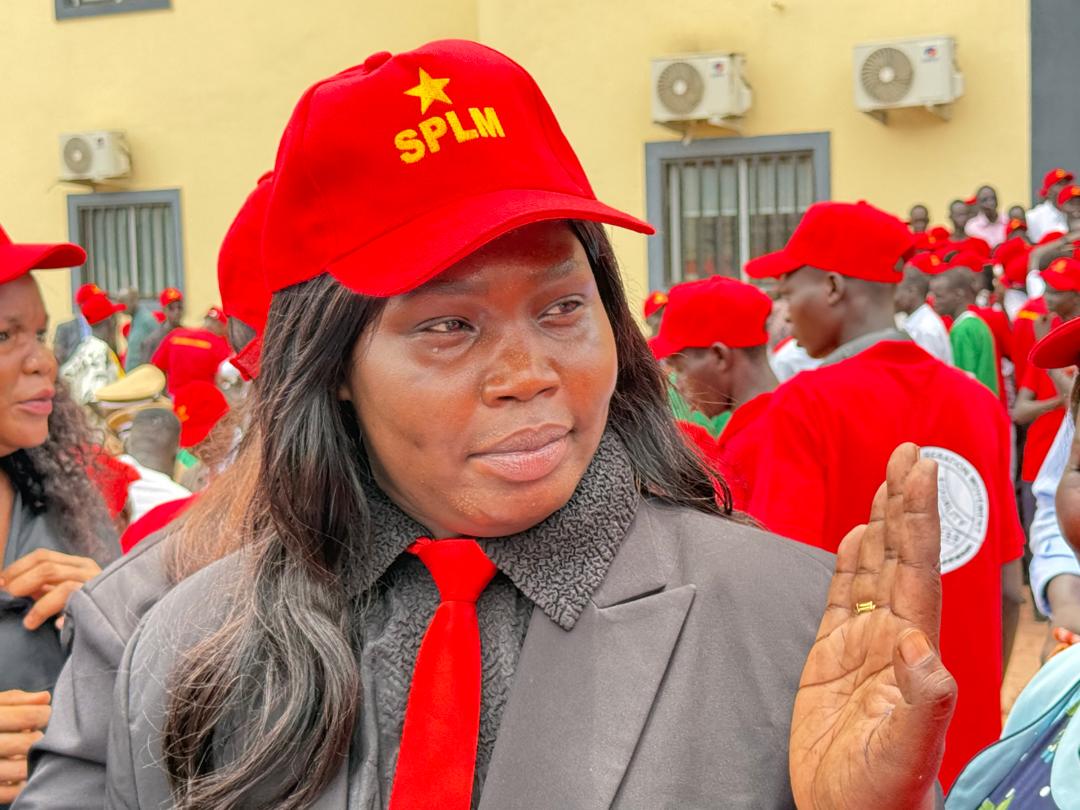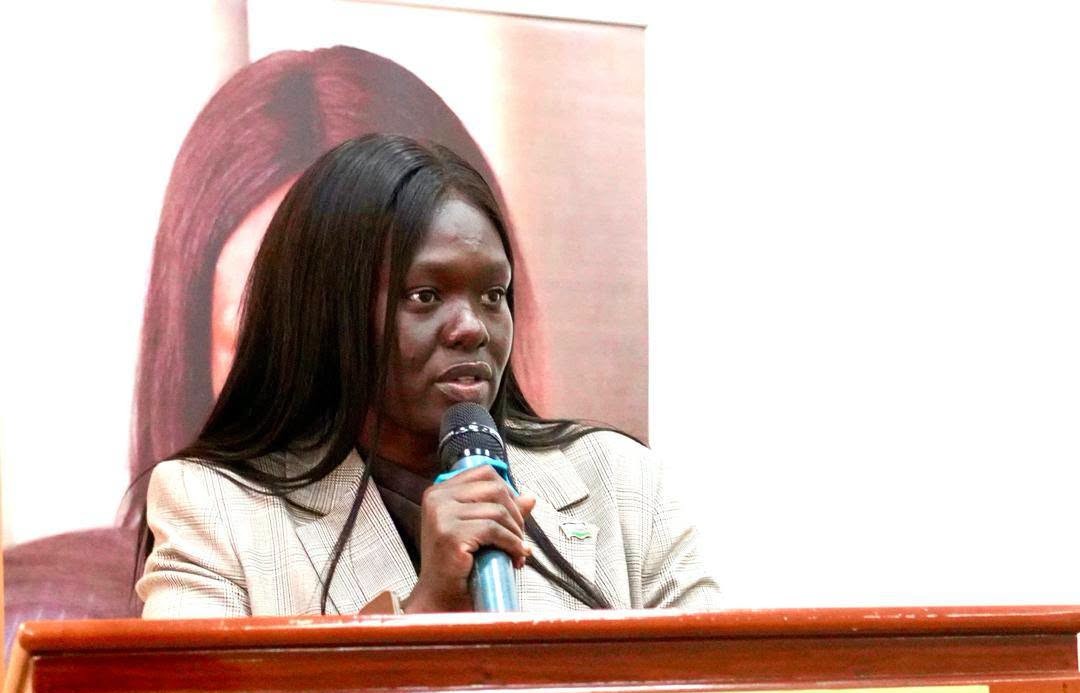
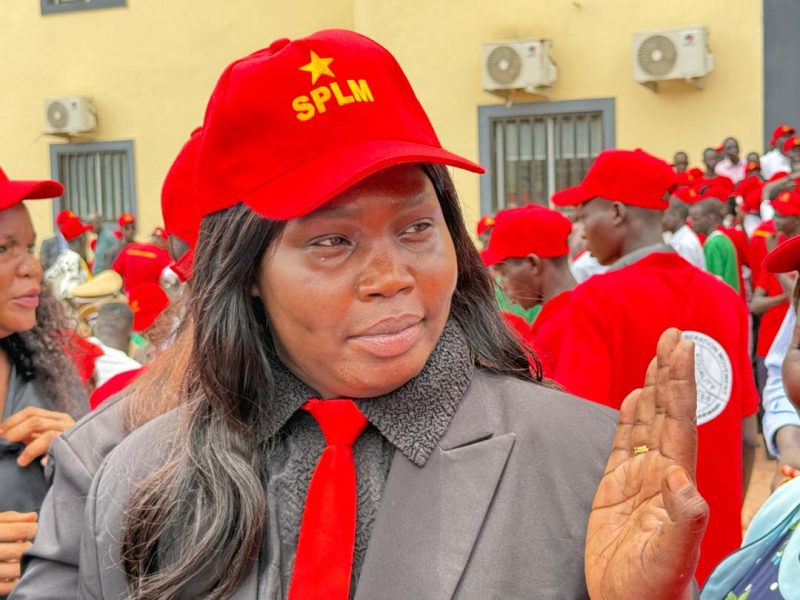
Ferida Philip Nyanan has entered the race for the governorship of Upper Nile State, bringing a new female contender into the ruling Sudan People’s Liberation Movement (SPLM)’s contest for one of South Sudan’s key state leadership positions.
Nyanan declared her intention in Juba on Friday, saying she would seek the party’s flag bearer position ahead of the planned December 22 general elections, with a campaign agenda centred on unity, security, change and development.
Her entry comes as political aspirants position themselves for the SPLM primaries, opening another conversation about women’s participation in leadership and their place in shaping South Sudan’s political future.
For Nyanan, a legal adviser by profession, the ambition goes beyond securing the party ticket.
She says her proposed programme would focus on challenges facing communities in Upper Nile, including insecurity, displacement and limited access to essential public services.
“It is an honour to stand in front of you today as a candidate for the SPLM in the position of governor of Upper Nile State, carrying a vision to bring unity, change and development,” Nyanan said.
Nyanan has identified security and stability as central priorities, alongside the return of displaced residents to their homes and the rebuilding of communities affected by conflict.
She said she would work to create conditions that would allow displaced families to return home and rebuild their lives, making recovery and stability key pillars of her proposed leadership agenda.
The aspirant also outlined plans to improve basic health services, support Malakal Teaching Hospital, maintain water networks to provide clean drinking water and rehabilitate roads across the state.
Her emphasis on essential services places healthcare, water access and infrastructure at the centre of her pitch to lead Upper Nile.
“The return of communities to their homes, building their homes, the improvement of basic health facilities, or more precisely, the support of the Teaching Hospital in Malakal,” she said, outlining her priorities.
The proposals address issues that affect daily life in communities, where access to security, functioning health facilities, clean water and reliable roads is critical to recovery and development.
However, Nyanan’s entry into the race marks the beginning of a political contest, and her proposed priorities would require further detail on funding, implementation and how her administration would work with national and state institutions.
Nyanan’s declaration also brings women’s political participation into focus as South Sudan prepares for another electoral contest.
Women have continued to seek greater representation in political institutions, but aspiring female leaders face the challenge of translating their ambitions into party nominations, electoral support and positions where they can influence public policy.
By seeking the SPLM ticket for Upper Nile’s top executive position, Nyanan is pursuing a role that would place her at the centre of state-level decisions on security, public services and development.
Her legal background may also inform her approach to governance, although her campaign will ultimately be judged on the clarity of her proposals and her ability to build support within the party and among voters.
Her candidacy adds a female voice to the governorship contest, but the SPLM primaries will determine whether she secures the party’s backing to proceed to the wider electoral race.
Beyond security and infrastructure, Nyanan has pledged to promote youth participation in development programmes, arguing that young people should have opportunities to contribute to the state’s progress.
She said her programme would include “the integration of youth in development projects instead of carrying weapons.”
The message links her development agenda to the broader challenge of moving young people away from armed activity and towards constructive roles in their communities.
For a state seeking stability and recovery, that ambition would require practical measures to expand opportunities for young people and address the conditions that contribute to insecurity.
Nyanan has presented unity, the return of displaced communities and improved services as priorities for the future she wants to build in Upper Nile.
Her declaration, however, is the opening stage of a political process rather than a guarantee of nomination or election.
As the SPLM primaries approach, her campaign will face the task of turning its promises into a detailed programme capable of winning party support.
The party’s primary schedule and further details of Nyanan’s campaign programme were not provided in her announcement.