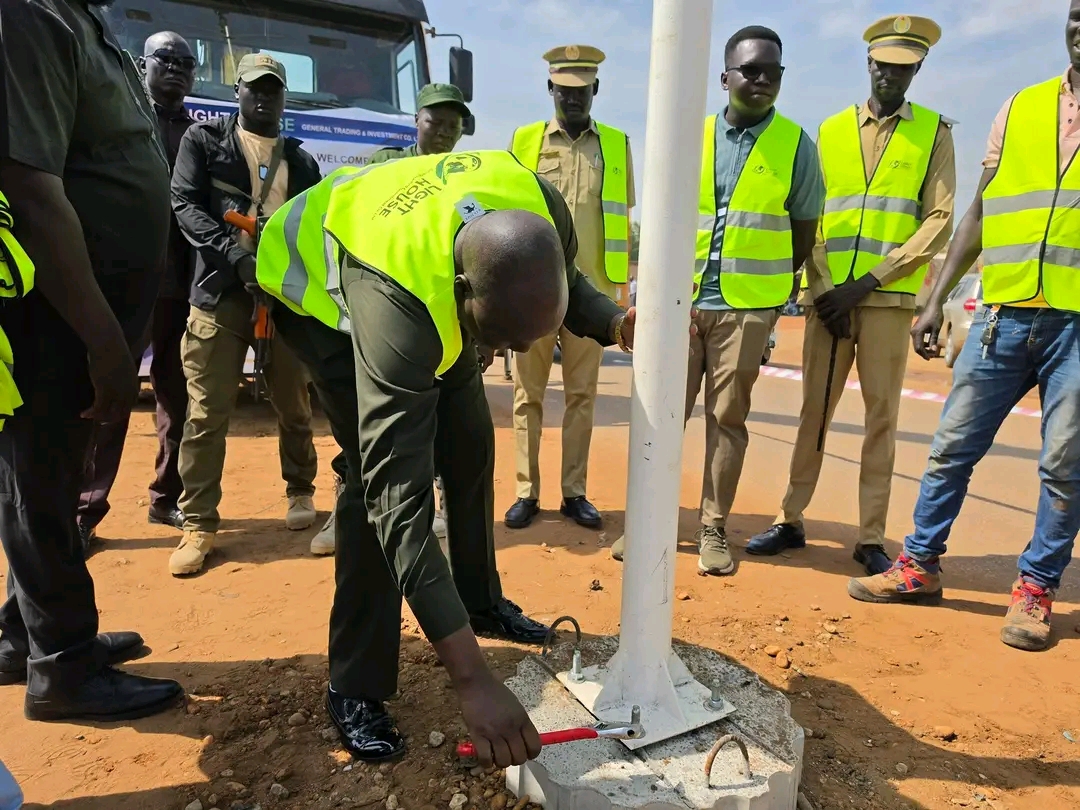
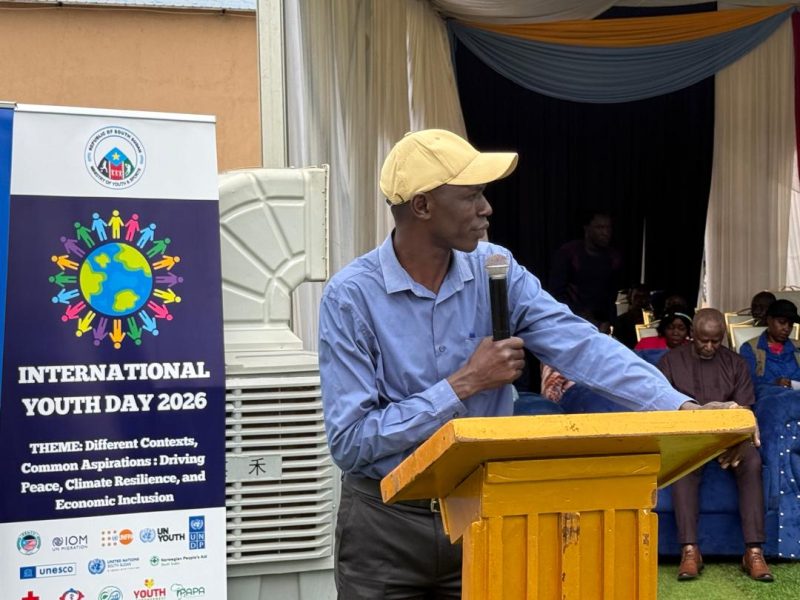
Youth leaders and civil society activists have clashed with South Sudan’s Interior Minister, Gen. Aleu, over the decision to change the venue for the country’s International Youth Day celebration.
The celebration had been expected to take place at the Dr John Garang Mausoleum, a site of major historical significance to South Sudan, but was moved to another venue at last minutes, prompting questions from youth representatives and civil society leaders.
National Youth Union Chairperson Taban Paride questioned why authorities changed the venue, arguing that young people had demonstrated discipline and had no intention of turning the celebration into a protest.
“Why do we fear the young people of this country? We have never protested, we have never gone to the streets, and yet the venue for our celebration was changed,” Paride said.
He said young South Sudanese should not be treated with suspicion, insisting that the youth had shown restraint despite the challenges facing them.
“I want to tell the young people that you are the most disciplined young people in this country. If this had happened in other countries, people would have misbehaved.”
Paride questioned why young people could not be allowed to celebrate at a national site associated with the country’s history and founding leadership.
He also called for greater engagement between the government and young people, particularly with the country preparing for elections.
“We want the President of the Republic to speak to the young people — the generation that is going to build this country and move it forward.”
The venue dispute also drew criticism from civil society representative Edmund Yakani, Executive Director of the Community Empowerment for Progress Organization (CEPO), who directly questioned the Interior Minister over who was responsible for preventing the youth from celebrating at the mausoleum.
Yakani said he was disappointed that young people had been denied access to a place where former SPLM leader and South Sudan founding figure Dr John Garang was laid to rest.
“I am very disappointed. How comes that young people cannot go to the museum where our founding father of the nation, Dr John Garang, was laid to rest, and celebrate there as young people?” Yakani said.
He called for the matter to be brought to the attention of President Salva Kiir Mayardit if another official or authority was responsible for the decision.
“If there is any person, let this message reach Mr President. Why can the young people be denied the opportunity to celebrate at the museum?”
Yakani questioned whether certain individuals considered themselves more entitled to national spaces than the younger generation.
“Who is that special person who wants to enjoy the museum and not the current generation?”
He warned against what he described as a culture of exclusion and marginalisation, drawing a comparison with the historical grievances that contributed to South Sudan’s struggle for independence.
“We moved out of Sudan because of oppression, marginalisation and denial to speak. Where now do we do this under the flag of South Sudan?”
Yakani also dismissed suggestions that authorities might have feared the youth would use the occasion to organise demonstrations.
“If the fear is that young people may organise a strike at the museum, that is wrong. Young people are not going to the bush. We are not going anywhere and we are not going to do anything.”
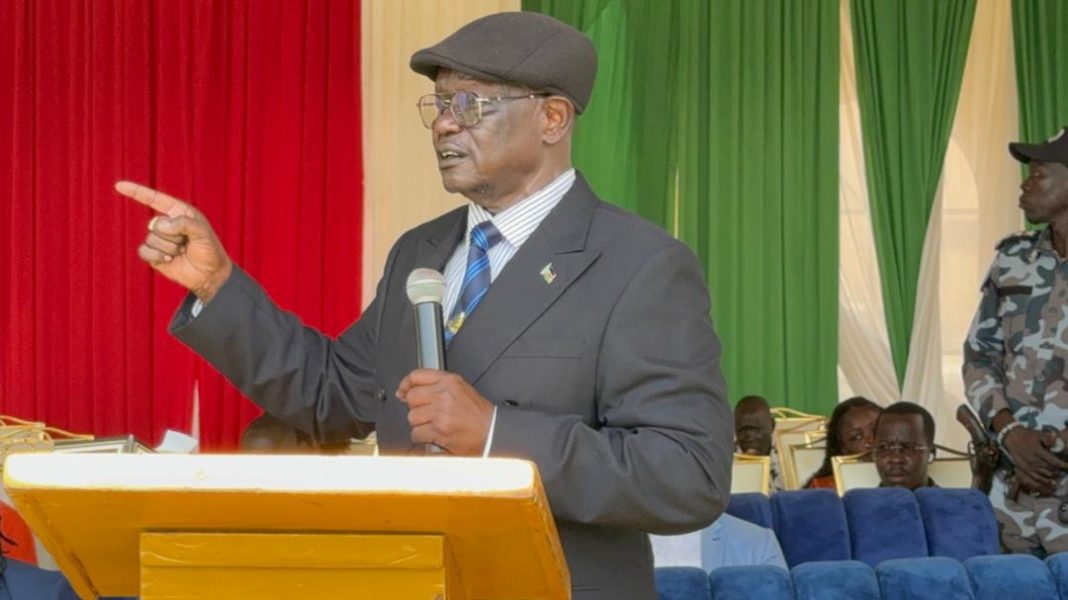
In response, Interior Minister Gen. Aleu Ayieny Aleu said the clearance process for the event had reached his office, but authorities had received different information about the planned gathering.
The minister said concerns were raised after reports that some participants had prepared printed T-shirts carrying slogans, contributing to the decision and complications surrounding the clearance of the event at the mausoleum.
The exchange turned what was intended to be a celebration of young South Sudanese into a wider debate over youth participation, freedom of expression and access to national public spaces.
Paride also used the occasion to call for stronger government support for young people, including greater funding for the Ministry of Youth and Sports and protection of the ministry from frequent political changes.
He argued that youth activities were inadequately funded despite young people making up a significant proportion of South Sudan’s population.
The National Youth Union chairperson further called for a dedicated space for the youth and urged authorities to establish a national youth conference where young people could deliberate on issues affecting them and develop a national youth manifesto.
With elections approaching, Paride urged young South Sudanese to scrutinise political promises and make informed choices about the leaders they support.
The disagreement over the celebration venue has placed renewed attention on the relationship between South Sudan’s government and its young population, who youth leaders say must have a greater role in shaping the country’s political and social future.