
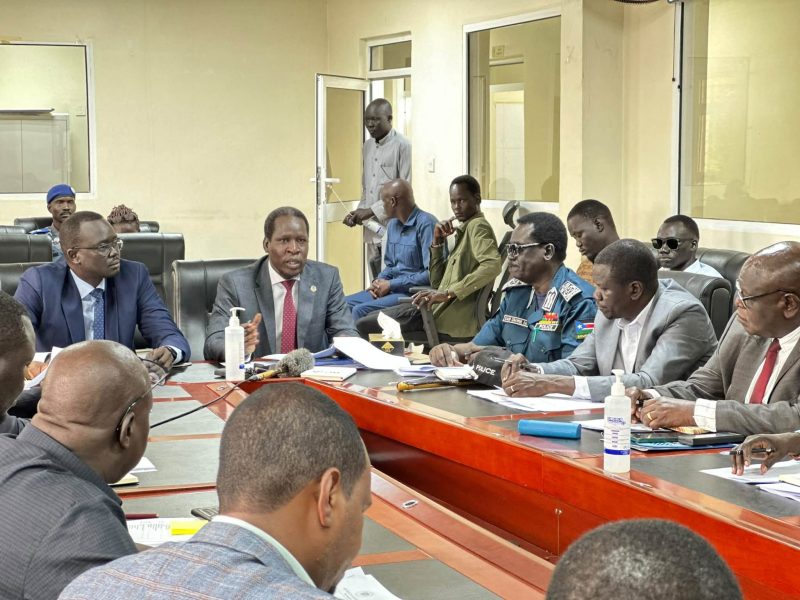
South Sudan’s newly established High-Level Task Force on Ebola Readiness and Response has held its inaugural meeting at the National Public Health Institute (NPHI).
The meeting reviewed the regional and national situation surrounding Ebola Bundibugyo Virus Disease (BVD), including potential risks to South Sudan and the country’s current preparedness priorities.
Members discussed key areas including surveillance and early detection, response capacity, coordination, community engagement, resource mobilisation and cooperation among government institutions and partners.
Health Minister Luke Thompson Thoan, who chairs the task force, called for sustained coordination and commitment to ensure South Sudan can prevent, detect and respond quickly to any potential Ebola threat.
Dr Ader Macar Aciek, Acting Executive Director of NPHI and secretary of the task force, said preparedness requires collective action and timely information-sharing.
“Preparedness is a shared responsibility. Strong coordination, timely information-sharing, adequate resources, and collective action are essential to ensuring that we can detect any potential threat early and respond effectively,” Dr Ader said.
The task force was established last week by President Salva Kiir Mayardit to provide strategic leadership, coordination and oversight of Ebola preparedness activities across the country.
Members agreed to establish subcommittees, including on resource mobilisation and community awareness.
They also agreed to hold coordination meetings every Tuesday to review progress, address emerging gaps and strengthen information-sharing.
The meeting brought together government institutions, development partners and other stakeholders to strengthen the country’s preparedness for a potential Ebola Bundibugyo Virus Disease (BVD) outbreak.