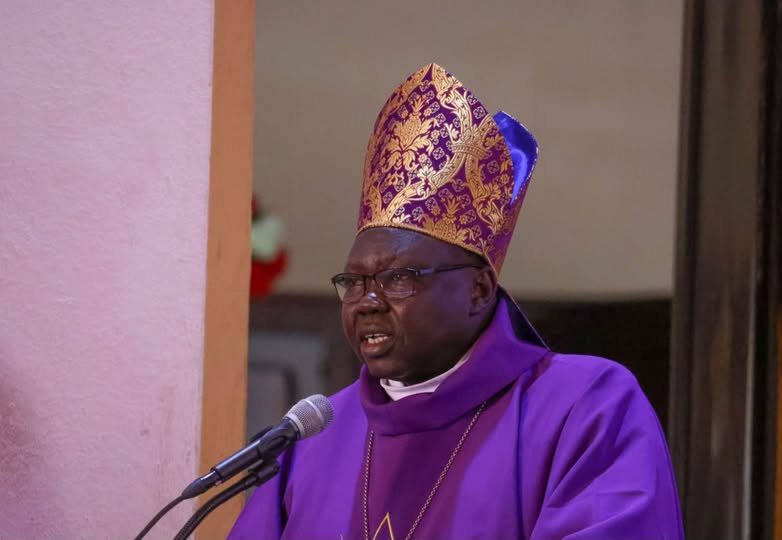
The Auxiliary Bishop of the Catholic Archdiocese of Juba, Santo Loku Pio, has raised alarm over corruption and the continued failure to pay public workers, questioning how government revenues are being managed.
Speaking during a public address, Bishop Loku Pio said the extent of corruption in South Sudan had become difficult to establish, while citizens continued to face economic hardship.
“The level of corruption is now known by God,” Bishop Loku Pio said.
He said the time had come for citizens to receive their rights and questioned the destination of revenues collected from different sectors of the economy.
“The money is being collected in the market, at airport, at the border, from petroleum, from gold, and from timber, no one knows where the money is going,” he said.
The bishop linked the concerns over public revenue management to the situation facing teachers, doctors and nurses, who he said remain unpaid.
“Teachers, doctors, and nurses are not paid and people are saying we have a government,” he said.
His remarks come amid broader public concerns over the management of South Sudan’s resources and the ability of government institutions to provide basic services to citizens.
Bishop Loku Pio also invoked the role of church leaders in speaking on behalf of citizens, saying religious leaders have a responsibility to stand with people facing hardship.
“We church leaders, we are holding the holy cross of this country,” he said.
He warned that continued suffering among citizens could not go unanswered.
“I would like to tell you that God will not allow innocent citizens to continue suffering like this,” Bishop Loku Pio said.
The bishop’s comments highlight concerns over accountability, public revenues and the delivery of essential services in South Sudan, where citizens continue to call for greater transparency in the management of national resources.
His remarks also place the church’s role in the wider national debate over governance, accountability and the rights of citizens.