
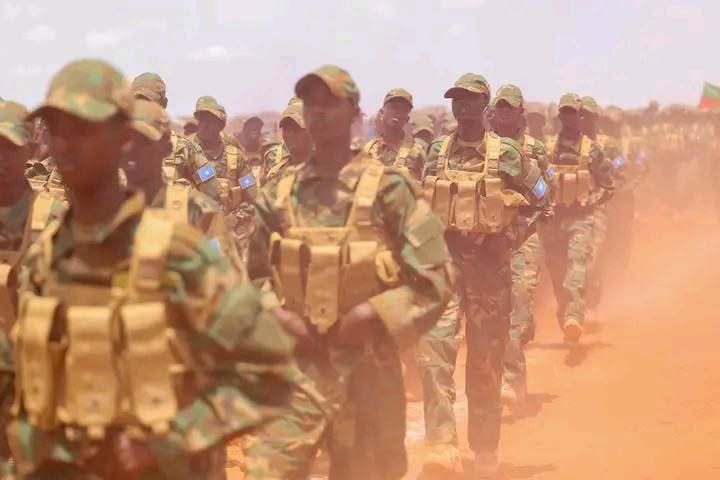
The reported detention of Somali soldiers in Ethiopia’s Somali Region has drawn fresh attention to a Saudi funded military training programme in Somalia and raised questions over whether the initiative is solely intended to rebuild Somalia’s national army or could have a wider regional role.
Somalia has confirmed that troops trained at the Xananbuure military camp in Galmudug crossed into Ethiopia, but officials have not publicly linked the soldiers to Sudan’s war.
Somalia’s National Security Adviser, Aways Haji Yusuf, said on 1 September that the soldiers had been granted permission to visit their families and that the federal government was aware they were in Ethiopia’s Somali Region.
Yusuf said the soldiers had used the route through Ethiopia to avoid insecure areas inside Somalia and indicated that any further developments would be communicated to the media. Garowe Online and Somali Guardian reported his confirmation.
But his explanation did not settle questions about how many soldiers crossed the border, what happened to them after entering Ethiopia or why some were reportedly taken into custody.
Garowe Online cited reports putting the number at about 300, while Sunatimes, citing Somali intelligence sources, reported a figure of 316.
It also said it had not independently confirmed that number with Ethiopian authorities. Other reports have put the number of soldiers involved between about 180 and 900.
Reports said some of the soldiers were taken to Jigjiga, the capital of Ethiopia’s Somali Region, after travelling in a convoy of hired vehicles. Ethiopian authorities have not publicly explained the reported detention.
The soldiers are understood to be part of a much larger military training programme.
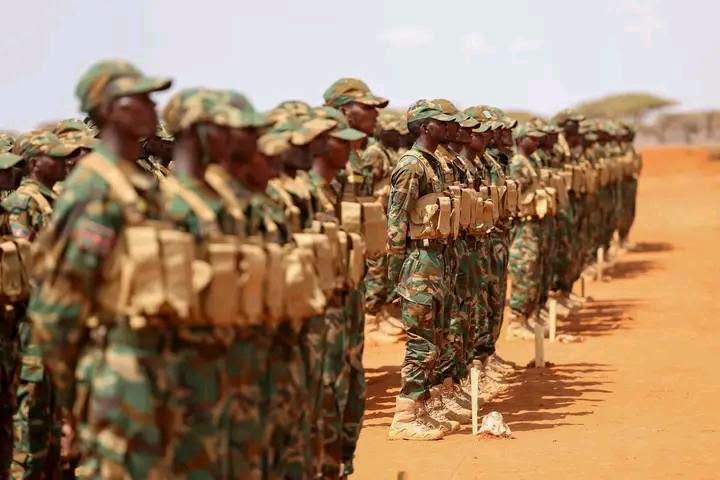
On 16 August, President Hassan Sheikh Mohamud presided over the graduation of about 3,000 Somali soldiers at the Xananbuure camp in Somalia’s Galgaduud region.
The Defense Post described the group as the largest cohort trained inside Somalia since the collapse of the central government in 1991. The recruits had spent almost a year undergoing military training, with instructors from Ukraine, Romania and Sudan involved in the programme.
Somalia has presented the training as part of efforts to rebuild its national armed forces and increase the country’s capacity to provide its own security.
The programme followed a military cooperation agreement signed in Riyadh on 9 February by Somali Defence Minister Ahmed Moallim Fiqi and Saudi Defence Minister Prince Khalid bin Salman.
The Somali government said the agreement was intended to strengthen defence and military cooperation between the two countries and covered areas of mutual interest. Al Jazeera reported that neither government publicly released detailed information about the agreement’s full scope.
Saudi military representatives were present at the Xananbuure graduation, while foreign instructors participated in the training. The Defense Post reported that the Saudi-funded programme stemmed from an agreement to train up to 5,000 troops.
Other reports have put the wider recruitment figure above 5,000. The Eastleigh Voice reported in July that 5,107 recruits were involved in the programme and alleged that foreign contractors from Romania, Ukraine, South Africa and Colombia were involved in the training. Those details have not been independently verified.
There is, however, no established evidence that Saudi officials control where the graduates are deployed after completing their training.
How Sudan entered the story
The connection to Sudan comes largely from separate media reports and allegations, rather than from evidence showing that the soldiers detained in Ethiopia were travelling to Sudan.
Kenya’s The Standard reported on 24 July that Saudi Arabia was overseeing a military training programme in Somalia involving more than 5,000 recruits and alleged that some were being prepared for eventual deployment alongside the Sudanese Armed Forces.
The report attributed the claims to the regional monitoring account Voice of Horn, which said foreign contractors from Romania, Ukraine, South Africa and Colombia were involved in the training. The Standard did not establish that the recruits had actually been deployed to Sudan.
Ethio Negari reportedly carried similar claims several days earlier. Neither Saudi Arabia nor the Somali government, nor the other parties named in those reports, has publicly confirmed that the programme is intended to supply fighters to Sudan’s war.
That distinction is important.
The Saudi-funded training programme and the movement of some of its graduates into Ethiopia are documented by official statements and multiple reports. The claim that the programme is designed to provide fighters for Sudan remains unproven.
One documented link between the training camp and Sudan is the participation of Sudanese military instructors.
Geeska, citing Africa Intelligence, reported in February that Sudanese military personnel had trained about 1,000 recruits in Galmudug in the months before the Saudi-Somalia military agreement.
The reported training was conducted under the oversight of Somalia’s National Intelligence and Security Agency.
The presence of Sudanese instructors does not, by itself, establish that the Somali recruits were destined for Sudan. It does, however, provide a factual connection between Sudanese military personnel and training activities in the same region.
A wider regional picture
The Jigjiga case comes as concerns grow over recruitment and the movement of fighters across the Horn of Africa.
In July, Ethiopian Prime Minister Abiy Ahmed told parliament that young people from Tigray, including minors, were being recruited and taken to Sudan to fight in the country’s war, according to Addis Standard and other reports.
The claims were disputed by the Tigray People’s Liberation Front, meaning the allegations remain contested.
They are also separate from the Saudi-funded Somali military programme and should not be treated as evidence that the two recruitment networks are connected.
Sudan’s war, which began in April 2023, has increasingly drawn regional attention because of the movement of people, weapons and military support across neighbouring countries.
For Somalia, however, the immediate question is more straightforward: what is the purpose and future deployment of the thousands of soldiers being trained with foreign funding?
The Jigjiga incident has brought that question into sharper focus.
For now, Somalia says the soldiers who crossed into Ethiopia were on authorised leave to visit their families.
Reports of their detention remain disputed over the exact numbers and circumstances, while the allegations of possible deployment to Sudan have not been independently established.
What happens to the Xananbuure graduates next and where they are ultimately deployed could provide a clearer indication of whether the programme is primarily about rebuilding Somalia’s army or has a wider regional dimension.