
South Sudan’s journey toward elections must be more than a contest for political power. It should provide a national opportunity to strengthen a common identity, rebuild trust and demonstrate that political differences can be managed without violence, exclusion or hatred.
As the country prepares for the December 2026 elections, inter-party dialogue should be guided by the principles of nationhood, patriotism, unity, forgiveness and genuine reconciliation.
Inter-party dialogue should go beyond meetings where political leaders exchange positions. It should provide a platform for political actors to acknowledge the wounds of the past, address present grievances and build confidence for the future.
South Sudan has experienced prolonged conflict, political mistrust, displacement and deep social divisions. These challenges cannot disappear simply because an election date has been set. The political process must therefore create space for reconciliation alongside political competition.
The United Nations has previously warned that mistrust among political stakeholders remains a challenge and has called for inclusive dialogue to build consensus around the country’s transition and elections.
Patriotism requires political actors to recognise that political victory should not come at the expense of national peace.
A party may win an election, another may lose, and governments may change. The nation, however, remains. Political parties should therefore compete over ideas, policies, leadership and development rather than over the identity, dignity or existence of fellow South Sudanese.
Political maturity will be measured by the ability to disagree politically while remaining united as citizens.
Reconciliation does not mean forgetting injustice or abandoning accountability. It means creating an environment where grievances can be addressed through lawful and peaceful mechanisms rather than revenge.
Forgiveness should form part of the national conversation because a country cannot continue carrying the wounds of the past into every generation.
Victims should be heard, communities encouraged to reconcile, leaders should acknowledge mistakes, and institutions should pursue justice fairly. National healing requires truth, responsibility and a willingness to move beyond cycles of retaliation.
The forthcoming elections should help strengthen South Sudan’s democratic culture rather than become another source of division.
Political parties, government institutions, civil society, faith leaders, traditional authorities, women, youth and citizens all have a role in creating an environment where political participation is peaceful and inclusive.
Political parties should commit to: Renouncing political violence and intimidation, respecting political pluralism and citizens’ right to choose freely, using dialogue to resolve political disagreements, respecting constitutional and electoral institutions, protecting civic and political space, promoting reconciliation among communities and political constituencies, accepting peaceful political competition and lawful electoral outcomes and putting the national interest above narrow partisan interests.
South Sudan needs a stronger culture of political coexistence, where political opponents are not treated as enemies simply because they disagree.
Political parties could consider developing a National Inter-Party Dialogue and Reconciliation Compact based on peace, patriotism, non-violence, democratic participation, mutual respect and national unity.
Such a compact could establish shared political commitments before, during and after the elections.
The purpose would not be to eliminate political differences. Democracy requires differences. Instead, it would seek to ensure that those differences are expressed peacefully, constitutionally and respectfully.
For many South Sudanese, elections represent an important opportunity for citizens to participate more directly in determining the country’s political direction.
But expectations alone cannot build a democratic nation.
The country needs a political culture in which the ballot is stronger than the bullet, dialogue is stronger than confrontation, and citizenship is placed above political faction.
The elections should not only answer the question of who governs South Sudan. They should also raise a deeper question: What kind of nation do South Sudanese want to build together?
I call upon South Sudanese political parties and leaders to approach inter-party dialogue with humility, patriotism and a genuine spirit of reconciliation.
Let us enter the dialogue room not only as representatives of political parties, but also as guardians of a common nation.
Let us forgive where forgiveness is possible, seek justice where justice is required, reconcile where division has prevailed, and compete where democratic competition is necessary.
Political differences should never become greater than the shared interest of South Sudan.
Political leaders should be able to say: “I may disagree with you politically, but I recognise you as my fellow citizen. I will compete with you through ideas, not violence; through persuasion, not intimidation; and through democratic participation, not exclusion.”
That principle can contribute to a peaceful democratic South Sudan.
Inter-party dialogue is an important part of political engagement and can provide space for addressing differences peacefully.
The road toward elections should therefore be accompanied by efforts toward national reconciliation.
South Sudan needs an electoral process that strengthens nationhood, restores public confidence and reinforces the understanding that political office is temporary while the nation is permanent.
Let political parties compete, but let South Sudanese remain united as citizens. Let the country remember its painful past without becoming prisoners of it, pursue justice while encouraging forgiveness, and promote reconciliation without abandoning democratic principles.
Nationhood, patriotism, unity, forgiveness, reconciliation and democracy should remain central to the country’s political journey toward the elections and beyond.
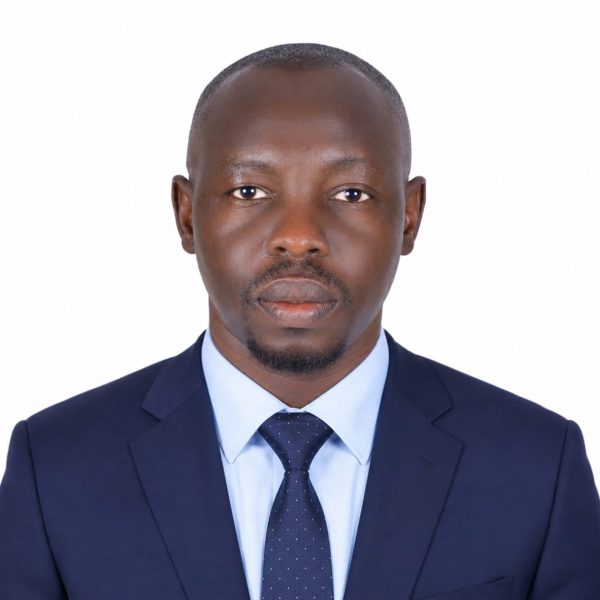
Hon. Mogga Charles Guya
Secretary for Foreign Affairs
South Sudan National Movement for Change (SSNMC), Juba